Autoplanning
The Heart of QPM
QPM automatically builds a project plan based on your business goals, resources, company policies, and task dependencies.
You no longer need to keep deadlines, team compositions, interdependencies, vacations, and sick leaves in your head. The system calculates everything for you and updates the plan whenever changes occur.



Who benefits from QPM Autoplanning

Business Owners / CEOs
Get a complete picture of goals, teams, delays, and the real state of projects — no micromanagement required.

Product Owners / Product Managers
Easily adjust the priorities of objectives based on business needs and instantly see how changes affect timelines and resources.

Project Managers / COOs
Manage risks, timelines, changes, and team workload automatically — while maintaining control over quality.

Tech Leads / CTOs / Engineering Leads
Focus on solving technical challenges while QPM handles task planning, dependencies, and assignments.

Game Producers & Game PMs
Automate complex iteration planning in game development — accounting for dependencies between creative work, technical tasks, and QA processes.
QA / Test Leads
Integrate review stages, test planning, and bug-related delays directly into the autoplanning process for seamless quality management.
Key Autoplanning features in QPM
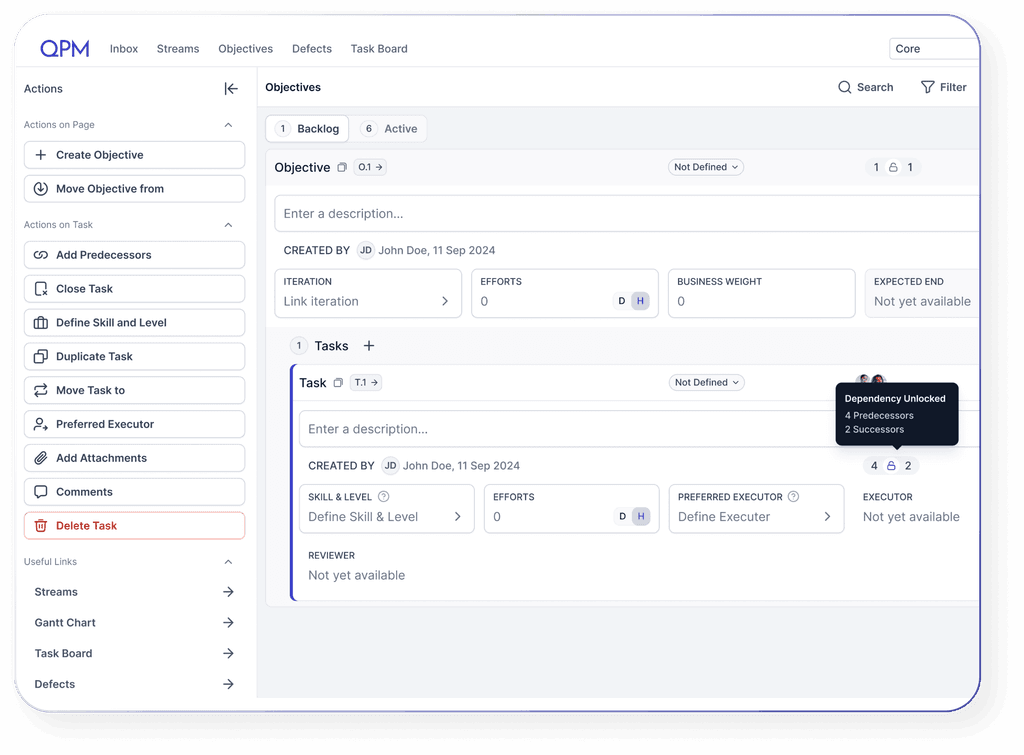
QPM automatically generates a complete project structure — from high-level goals to detailed tasks — based on your input, priorities, and company policies.



How autoplanning works in QPM
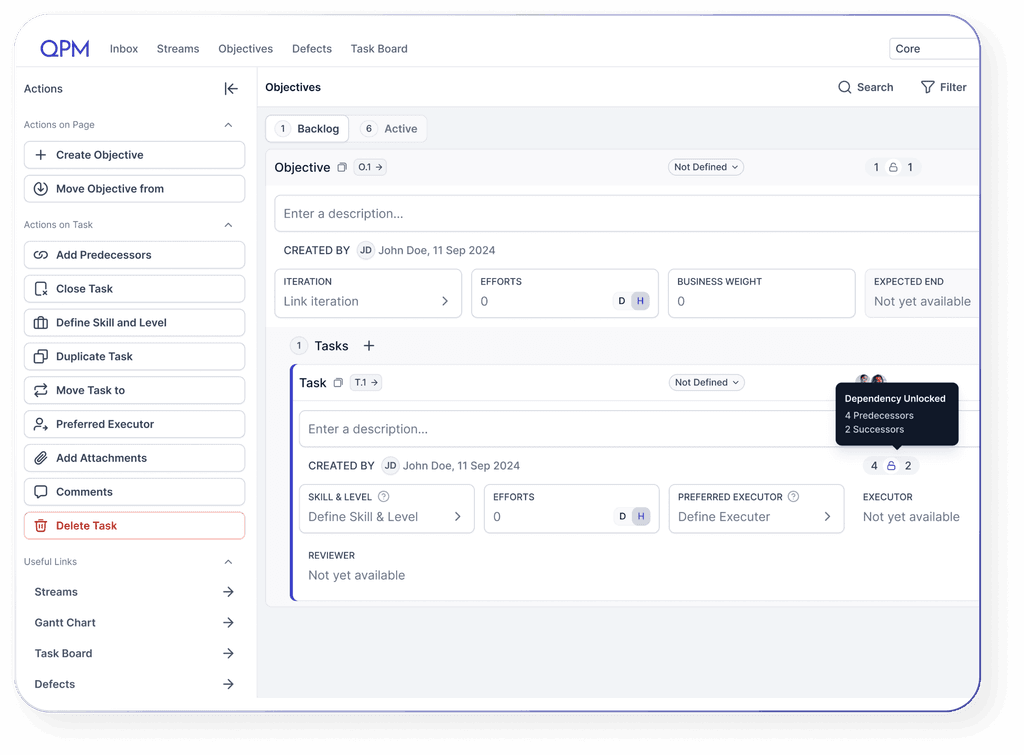
The overall project structure starts with setting up streams — these can represent teams, products, or entire project directions. Within each stream, you define clear objectives (goals) and create the tasks needed to achieve them.
Why Choose QPM for Autoplanning

Automatic Goal Execution Logic

Realistic Iteration Planning

Instant Adaptation to Changes

Full Transparency Across Teams

Optimized Resource Allocation

Protection of Critical Goals
Learn more about QPM